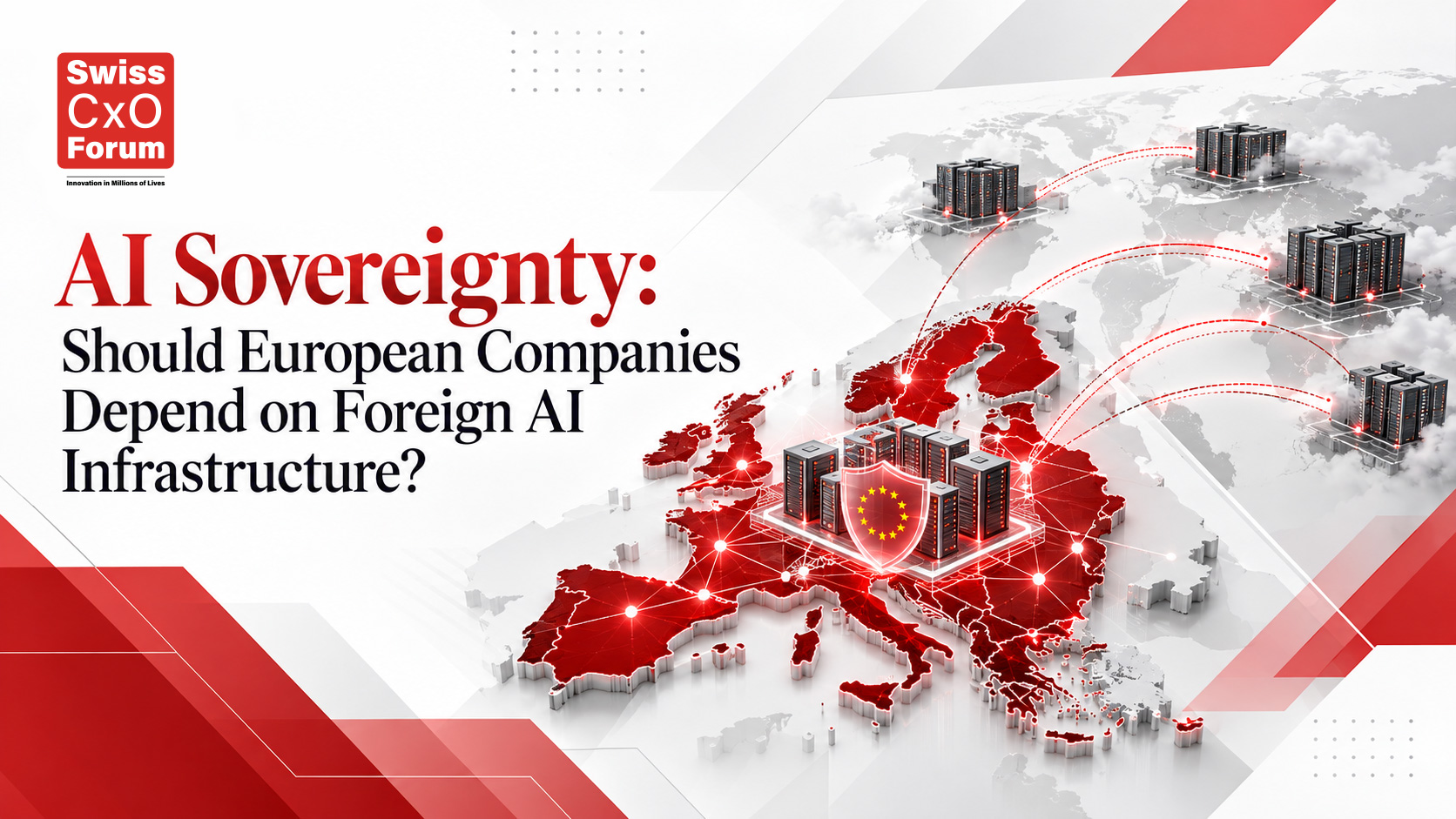
European companies can use foreign AI infrastructure, but they should understand what they depend on and retain control over sensitive data, critical operations, and future choices. AI sovereignty is not a requirement to build every system locally. It is the ability to make informed decisions about where AI runs, who can access data, and how easily the business can change providers.
For Swiss and European SMEs, that distinction matters. A global AI platform may offer advanced models, rapid deployment and the capacity to scale. Yet the same platform can become difficult to replace once it is embedded in customer service, internal knowledge systems, or operational decisions.
Where does AI dependence create risk?
The first question is data control. Leaders need to know where prompts, uploaded files, outputs, and logs are processed and stored. They should also establish who can access that information, whether it may be used to improve a provider’s models, and which subcontractors are involved.
The second is operational continuity. If a provider changes its pricing, terms, or service availability, what happens to the processes built around it? Dependence becomes a business risk when teams cannot retrieve their data, move workflows or keep an essential service running.
The third is governance. European companies need to assess applicable data protection and AI requirements for each use case. The EU’s cloud sovereignty framework looks beyond the location of a data centre to factors including legal control, operations, supply chains, security, and data and AI governance.
These questions are especially relevant to Swiss businesses serving customers across borders. The right assessment depends on the data, the provider, the countries involved, and the role AI plays in a decision.
Does AI sovereignty mean avoiding foreign providers?
No. A blanket ban could deny smaller businesses useful technology and slow innovation. A better approach is to match the level of control to the level of risk.
A team drafting public marketing copy may have different needs from one analysing confidential customer records or using AI in a critical production process. Before approving a tool, leaders can ask:
- What data will the system receive, and is all of it necessary?
- Where will that data be processed, and who can access it?
- Can we review the system’s outputs and keep people accountable for decisions?
- Can we export our data and move the workflow if our needs change?
For personal data transfers, European Data Protection Board guidance makes clear that organisations must assess the relevant transfer arrangements and safeguards. Hosting data in Europe alone does not answer every question about access or onward transfers.
A leadership decision, not just a technology choice
AI sovereignty calls for a practical portfolio strategy: use suitable global tools where they deliver value, consider European or Swiss alternatives where control is essential, and avoid making any single provider impossible to replace. Document decisions, assign ownership, and revisit them as technology and business needs change.
For executives, the goal is to preserve the freedom to innovate and the ability to remain accountable. Swiss CxO Forum brings leaders and SMEs together to exchange knowledge and navigate responsible digital transformation. Contact us to discuss how your organisation can approach AI adoption with greater clarity, resilience and control.