
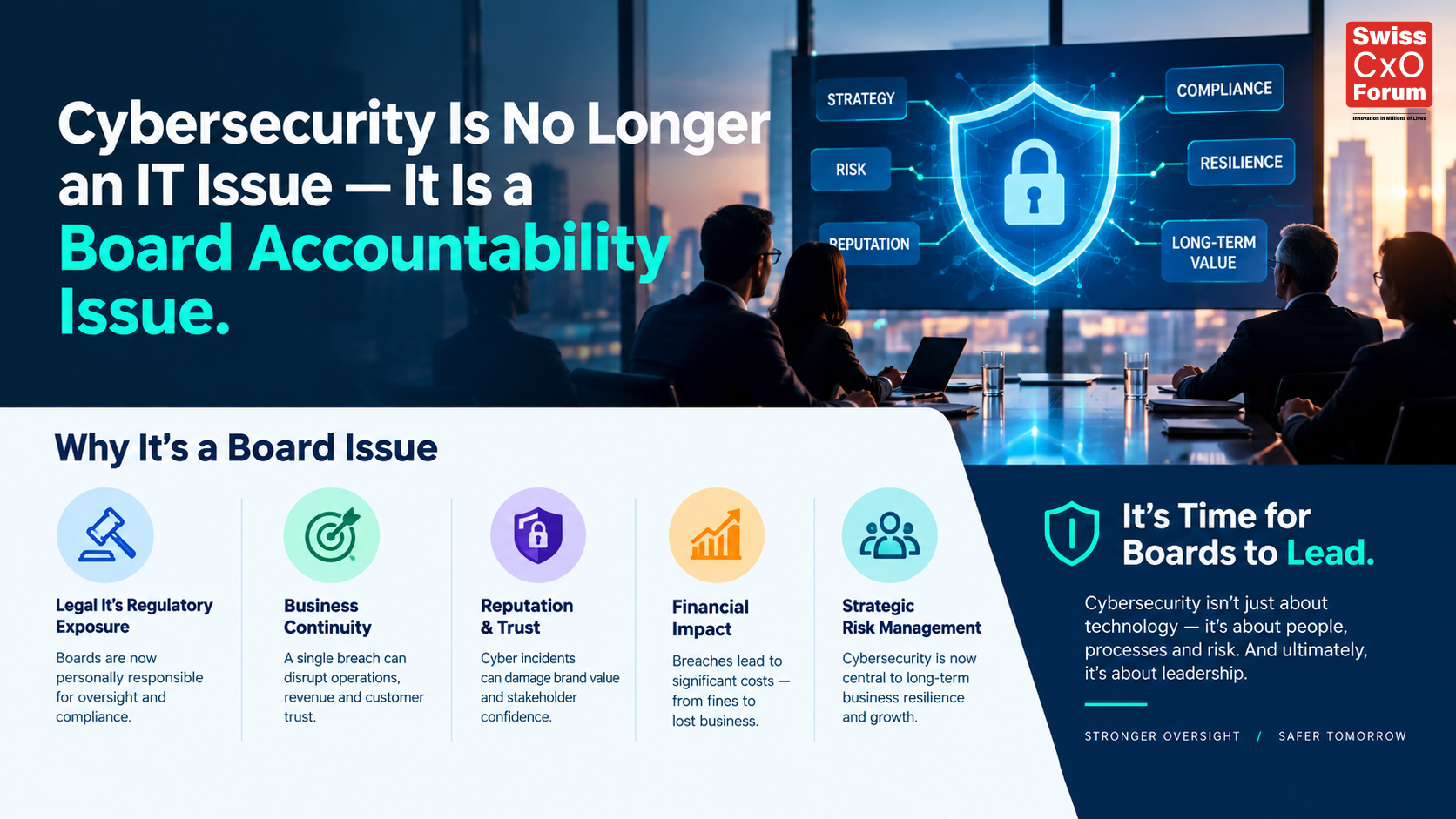
Cybersecurity was once considered a technical responsibility managed primarily by IT departments. Today, it has become a critical business risk that demands direct attention from boards and C-suite leaders. As organisations become increasingly dependent on digital platforms, cloud systems, connected supply chains and artificial intelligence, a cyber incident can affect far more than technology. It can disrupt operations, damage customer trust, expose confidential data and create serious financial and reputational consequences.
For this reason, cybersecurity is no longer only an IT issue. It is a board accountability issue.
Why Must Boards Take Responsibility for Cybersecurity?
Boards are responsible for overseeing the risks that could threaten an organisation’s performance, resilience and long-term value. Cyber risk now belongs within this responsibility.
Although IT teams manage security tools, systems and technical controls, leadership must determine the organisation’s overall risk appetite, investment priorities and response strategy. Board members do not need to become cybersecurity specialists, but they must understand the organisation’s most important digital assets, potential vulnerabilities and level of preparedness.
Cybersecurity governance begins with asking the right questions:
- Which business operations are most exposed to cyber threats?
- What data and digital assets are most valuable?
- How quickly could the organisation detect and contain an attack?
- Is there a tested cyber incident response plan?
- Are employees, suppliers and external partners included in the security strategy?
Clear answers help the board evaluate whether the organisation is genuinely prepared or simply relying on technology without sufficient governance.
Cybersecurity Is a Business Continuity Priority
A cyberattack can interrupt production, delay customer services, compromise intellectual property and disrupt supplier relationships. For SMEs, the impact can be particularly severe because they may have limited resources, smaller security teams and a greater dependence on a few critical systems.
An effective cybersecurity strategy must therefore connect technology with business continuity. This includes identifying critical processes, establishing recovery priorities, assigning leadership responsibilities and conducting regular incident simulations.
The goal is not to eliminate every possible cyber risk. No organisation can guarantee complete protection. The goal is to build cyber resilience—the ability to anticipate threats, respond effectively and recover quickly while maintaining essential operations.
Building a Board-Level Cybersecurity Culture
Strong cybersecurity governance requires more than an annual presentation from the IT team. It should become part of ongoing board discussions and strategic decision-making.
Boards and executive leaders should:
- Include cybersecurity in enterprise risk management.
- Define clear ownership across leadership and operational teams.
- Review relevant cybersecurity metrics regularly.
- Evaluate risks associated with vendors and supply-chain partners.
- Ensure employees receive practical security awareness training.
- Test incident response and recovery plans.
- Consider cybersecurity during digital transformation, AI adoption, mergers and new partnerships.
Cybersecurity should also be viewed as a business enabler. Organisations that demonstrate responsible data management and strong digital governance can build greater trust with customers, employees, investors and partners.
From Technical Protection to Leadership Accountability
The most important shift is one of mindset. Cybersecurity cannot remain confined to the IT department or be discussed only after an incident occurs. It must be integrated into business strategy, investment decisions and organisational governance.
Boards that take an active role in cybersecurity are better positioned to protect business continuity, strengthen stakeholder confidence and guide sustainable digital growth. In an increasingly connected economy, cyber resilience is not simply a technical capability—it is a leadership responsibility.
The Swiss CxO Forum brings together senior leaders, industry experts and decision-makers to exchange knowledge and strengthen responsible business leadership. To explore how your organisation can improve cybersecurity governance, digital resilience and executive accountability, contact us through swisscxoforum.ch.